[History] 21. 천국과 지옥, 선과 악의 이분법은 어디서 왔을까? 조로아스터교의 그림자 (Heaven and Hell, Good and Evil: Where Did the Dichotomy Come From? The Shadow of Zoroastrianism)
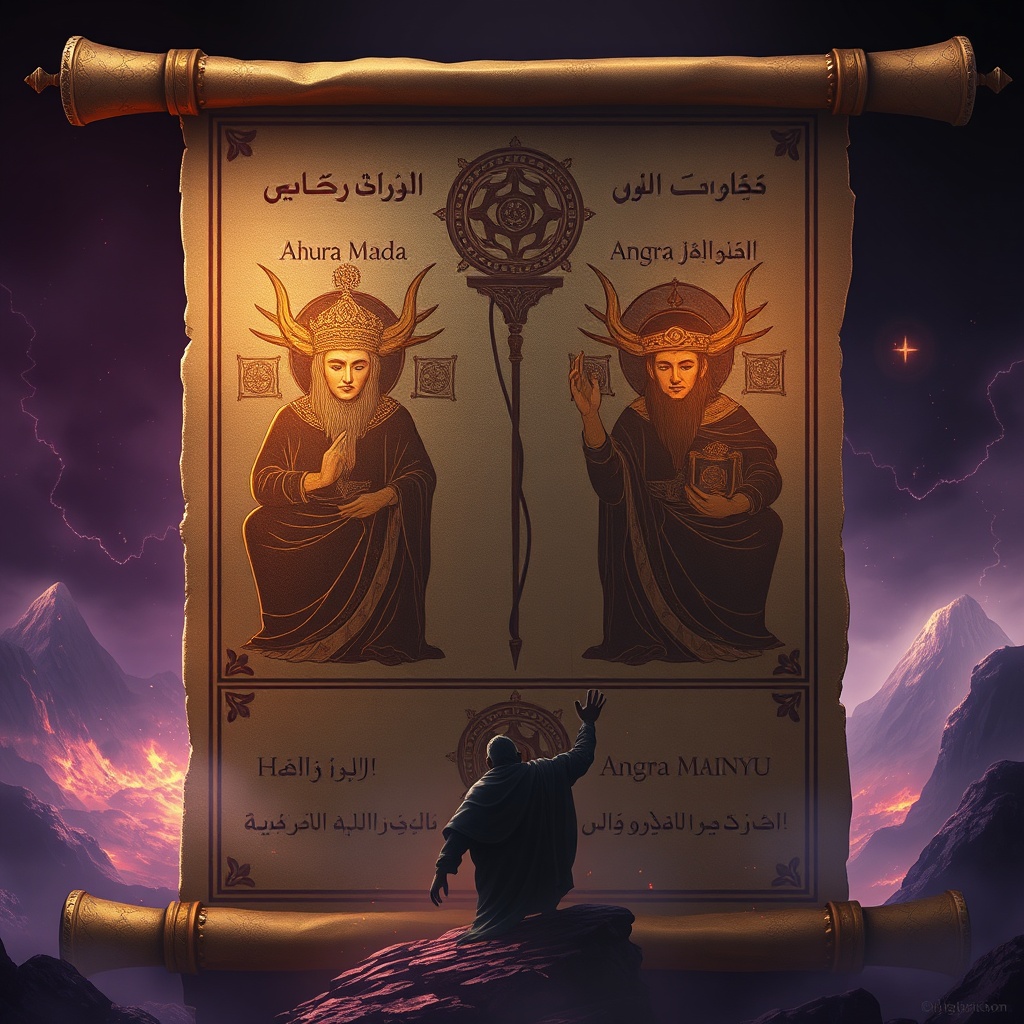
우리가 익히 아는 종교적인 개념들, 예를 들어 세상은 선과 악의 끊임없는 투쟁으로 이루어져 있고, 인간은 그 속에서 자유 의지로 선을 택해야 하며, 죽음 이후에는 최후의 심판을 통해 천국이나 지옥으로 가게 된다는 생각. 이 모든 것이 마치 처음부터 그랬던 것처럼 자연스럽게 느껴지시나요? 🤔 하지만 놀랍게도 이 거대한 사상적 흐름의 시작점이 성경보다 수백 년 앞선, 지금은 다소 생소하게 들리는 고대 페르시아의 종교에 있다는 사실을 아시나요? 📜 오늘은 세계사의 숨겨진 조연, 조로아스터교가 어떻게 인류의 정신세계에 지대한 그림자를 드리웠는지, 그 흥미진진한 여정을 함께 떠나보겠습니다. 🌍
Familiar religious concepts, such as the world being a constant struggle between good and evil, humans having free will to choose good, and facing a Last Judgment after death to determine their fate in Heaven or Hell. Do these all feel as natural as if they've always existed? 🤔 Surprisingly, the origin of this profound intellectual current predates the Bible by centuries, tracing back to an ancient Persian religion that might sound somewhat unfamiliar today. 📜 Today, we embark on a fascinating journey to explore how Zoroastrianism, a hidden player in world history, cast a monumental shadow over humanity's spiritual landscape. 🌍
세상의 양극단, 조로아스터교의 탄생 🌟
이야기는 기원전 1000년경에서 600년경 사이, 고대 페르시아의 황량한 고원에서 시작됩니다. 당시 부족 신앙과 자연 숭배가 주류를 이루던 시대에, 예언자 조로아스터(Zarathushtra)는 기존의 관념을 뒤흔드는 혁명적인 가르침을 들고 나타났습니다. 그는 선과 악이라는 극명한 두 가지 원리가 세상 모든 것을 지배한다고 설파했죠. 빛의 신이자 지혜의 존재인 아후라 마즈다(Ahura Mazda)는 선을, 그리고 어둠과 파괴의 영인 앙그라 마이뉴(Angra Mainyu)는 악을 대표했습니다. 이 두 세력은 우주의 창조 순간부터 끊임없이 투쟁하며 인간 세상에도 영향을 미친다고 보았습니다.
특히 조로아스터교의 핵심은 인간의 자유 의지에 있었습니다. 우리는 선과 악의 투쟁 속에서 어떤 편에 설지 스스로 선택할 수 있으며, 이 선택은 죽음 이후의 운명을 결정한다는 것이죠. 최후의 심판과 영원한 천국, 또는 지옥이라는 개념은 이때부터 인류의 사상 속에 깊이 뿌리내리기 시작했습니다. 놀랍지 않나요? 이 모든 개념이 수천 년 전 페르시아에서 시작되었다니!
The Dichotomy of the World: The Birth of Zoroastrianism 🌟
The story begins between approximately 1000 BCE and 600 BCE, on the arid plateaus of ancient Persia. In an era dominated by tribal beliefs and nature worship, the prophet Zarathushtra (Zoroaster) emerged with revolutionary teachings that shook existing notions. He proclaimed that all things in the world were governed by two distinct principles: good and evil. Ahura Mazda, the god of light and wisdom, represented good, while Angra Mainyu, the spirit of darkness and destruction, represented evil. These two forces, he taught, have been in constant struggle since the moment of cosmic creation, influencing the human world as well.
Crucially, at the core of Zoroastrianism was the concept of human free will. We could choose which side to align with in the struggle between good and evil, and this choice would determine our fate after death. The concepts of the Last Judgment, eternal Heaven, or Hell began to take deep root in human thought from this point onward. Isn't it astonishing? To think that all these concepts originated in Persia thousands of years ago!
페르시아 제국의 확장과 사상의 전파 👑
조로아스터교는 이후 아케메네스 페르시아 제국(기원전 550-330년)의 국교로 자리 잡으며 그 위상이 크게 높아졌습니다. '최초의 세계 제국'이라 불리는 페르시아는 광대한 영토와 다양한 민족을 아우르며, 자연스럽게 종교적, 문화적 교류의 장이 되었습니다. 바로 이 시기, 역사상 중요한 만남이 이루어지죠. 기원전 6세기, 바빌로니아에 의해 멸망하고 포로로 잡혀왔던 유대인들이 페르시아의 지배 아래 놓이게 된 것입니다. 이른바 바빌론 유수 사건이죠.
당시 유대교는 지금과 같은 형태가 아니었습니다. 현세에서의 삶과 율법 준수에 더 큰 비중을 두었으며, 악마의 개념도 모호했고, 사후 세계에 대한 구체적인 언급도 적었죠. 그런데 페르시아에서 조로아스터교를 접하면서 유대인들의 신앙관에 서서히 변화가 일어나기 시작합니다. 마치 마른 스펀지가 물을 흡수하듯, 새로운 사상들이 유대교의 기존 체계 속으로 스며들기 시작한 것입니다. 과연 어떤 변화를 가져왔을까요? 🤔
Expansion of the Persian Empire and the Spread of Ideology 👑
Zoroastrianism subsequently gained significant prominence as the state religion of the Achaemenid Persian Empire (550-330 BCE). Known as the 'first world empire,' Persia encompassed vast territories and diverse peoples, naturally becoming a melting pot of religious and cultural exchange. It was during this period that a critically important historical encounter took place. In the 6th century BCE, the Jews, who had been conquered and exiled by Babylonia, came under Persian rule. This was the infamous Babylonian Captivity.
At that time, Judaism was not in its current form. It placed greater emphasis on life in this world and adherence to the law; the concept of evil was ambiguous, and specific mentions of an afterlife were sparse. However, upon encountering Zoroastrianism in Persia, the Jewish worldview gradually began to transform. Like a dry sponge absorbing water, new ideas started to permeate the existing framework of Judaism. What changes did this bring about? 🤔
유대교, 기독교, 이슬람교에 드리운 그림자 🕯️
페르시아의 지배 아래에서 유대인들은 조로아스터교의 영향을 직접적으로 받게 됩니다. 이전에는 모호했던 악마의 존재는 사탄이라는 구체적인 형상을 얻게 되고, 종말론적 세계관과 함께 부활, 최후의 심판, 천국과 지옥 같은 개념이 유대교 내에서 점차 확고해졌습니다. 이는 구약 성경의 일부 후대 문헌이나 외경에서 그 흔적을 찾아볼 수 있죠.
이러한 변화는 이후 기독교의 탄생과 발전에도 결정적인 영향을 미쳤습니다. 예수 그리스도를 통한 구세주의 도래, 세상의 종말과 천국과 지옥의 명확한 구분, 그리고 빛과 어둠의 대립 등 기독교 신학의 많은 핵심 요소들이 조로아스터교적 사상과 놀랍도록 닮아 있습니다. 이슬람교 역시 알라를 유일신으로 숭배하지만, 종말론적 심판, 천국(자나), 지옥(나르) 개념 등에서 조로아스터교의 영향을 엿볼 수 있습니다.
조로아스터교의 핵심 교리 중 하나는 '선한 생각, 선한 말, 선한 행동'입니다. 이는 인간이 자유 의지를 통해 선을 실천함으로써 악의 세력에 대항하고, 종말에 다가올 최종 승리에 기여할 수 있다는 믿음을 담고 있습니다. 이는 다른 종교들의 윤리적 가르침에도 큰 울림을 주었습니다.
다음 표를 통해 세 종교에 나타난 조로아스터교적 요소의 흔적을 비교해 볼까요?
| 개념 | 조로아스터교 | 유대교 (후기) | 기독교 | 이슬람교 |
|---|---|---|---|---|
| 선악 이분법 | 명확 (아후라 마즈다 vs 앙그라 마이뉴) | 페르시아 영향 후 강화 (선한 신 vs 사탄) | 명확 (하나님 vs 사탄/악마) | 명확 (알라 vs 이블리스/샤이탄) |
| 최후의 심판 | 있음 (개인의 행위에 따라) | 페르시아 영향 후 등장/강화 | 있음 (예수 재림 시) | 있음 (알라 심판 시) |
| 천국/지옥 | 있음 (선행/악행에 따라) | 페르시아 영향 후 구체화 | 있음 (믿음과 행위에 따라) | 있음 (순종과 불순종에 따라) |
| 구세주/메시아 | 있음 (사오샨트) | 페르시아 영향 후 강화 (메시아 대망론) | 있음 (예수 그리스도) | 있음 (마흐디/예수 재림) |
The Shadow Cast on Judaism, Christianity, and Islam 🕯️
Under Persian rule, Jews were directly influenced by Zoroastrianism. The previously ambiguous existence of evil gradually took on a concrete form as Satan, and concepts such as resurrection, the Last Judgment, Heaven, and Hell became increasingly established within Judaism, alongside an eschatological worldview. Traces of this can be found in some later texts of the Old Testament and apocryphal works.
These changes had a decisive impact on the birth and development of Christianity. Many core elements of Christian theology, such as the advent of a savior through Jesus Christ, the end of the world and a clear distinction between Heaven and Hell, and the opposition of light and darkness, bear striking similarities to Zoroastrian ideas. Islam, while worshipping Allah as the one God, also shows influences of Zoroastrianism in its concepts of eschatological judgment, Heaven (Jannah), and Hell (Nar).
One of the core tenets of Zoroastrianism is 'good thoughts, good words, good deeds.' This encapsulates the belief that humans, through free will, can practice goodness to counter the forces of evil and contribute to the ultimate victory that will come at the end of time. This greatly resonated with the ethical teachings of other religions.
Shall we compare the traces of Zoroastrian elements found in the three religions through the following table?
| Concept | Zoroastrianism | Judaism (Later) | Christianity | Islam |
|---|---|---|---|---|
| Good-Evil Dichotomy | Clear (Ahura Mazda vs Angra Mainyu) | Strengthened after Persian influence (Good God vs Satan) | Clear (God vs Satan/Devil) | Clear (Allah vs Iblis/Shaytan) |
| Last Judgment | Present (Based on individual actions) | Emerged/Strengthened after Persian influence | Present (At Christ's second coming) | Present (At Allah's judgment) |
| Heaven/Hell | Present (Based on good/evil deeds) | Became concrete after Persian influence | Present (Based on faith and deeds) | Present (Based on obedience and disobedience) |
| Savior/Messiah | Present (Saoshyant) | Strengthened after Persian influence (Messianic expectation) | Present (Jesus Christ) | Present (Mahdi/Return of Jesus) |
현대 문명 속 조로아스터교의 유산 ✨
조로아스터교는 오늘날 인도 서부에 주로 거주하는 파르시 공동체를 통해 명맥을 이어오고 있으며, 그 신도 수는 많지 않지만, 인류 사상사에 미친 영향은 실로 거대합니다. 고대 페르시아의 황량한 고원에서 피어난 하나의 사상이 동서양을 넘어 수천 년간 인류의 정신세계를 지배하는 거대한 종교적 흐름의 원류가 되었다는 사실은 그 자체로 경이롭습니다. 우리가 매일 듣고, 생각하고, 믿는 '선과 악', '천국과 지옥'이라는 개념들이 바로 이 조로아스터교의 그림자 속에서 자라났다고 생각하면, 역사의 숨겨진 연결고리에 감탄하지 않을 수 없습니다.
일부 학자들은 조로아스터교의 영향이 과장되었다고 주장하기도 합니다. 특정 종교적 개념들이 시대를 초월하여 독립적으로 발생할 수 있으며, 유사성은 우연의 일치이거나, 보편적인 인간의 사유 과정에서 비롯된 것일 수 있다는 관점이죠. 하지만 페르시아 제국의 역사적 맥락과 유대교의 변화 양상을 고려할 때, 조로아스터교의 영향은 무시할 수 없는 수준이라는 것이 지배적인 견해입니다.
The Legacy of Zoroastrianism in Modern Civilization ✨
Zoroastrianism continues its lineage today primarily through the Parsi community residing in western India, and while its number of adherents is small, its impact on the history of human thought is truly immense. The fact that an ideology born on the barren plateaus of ancient Persia became the source of grand religious currents that transcended East and West, dominating humanity's spiritual world for thousands of years, is wondrous in itself. When we consider that the concepts of 'good and evil,' 'Heaven and Hell' that we hear, think, and believe daily grew out of this shadow of Zoroastrianism, one cannot help but marvel at the hidden connections in history.
Some scholars argue that the influence of Zoroastrianism might be exaggerated. They propose that certain religious concepts can arise independently across different eras, and similarities might be coincidental or stem from universal human thought processes. However, considering the historical context of the Persian Empire and the patterns of change within Judaism, the prevailing view is that Zoroastrianism's influence is undeniable.
자주 묻는 질문 (FAQ) ❓
-
Q: 조로아스터교는 아직도 존재하는 종교인가요?
A: 네, 현재도 존재합니다. 주로 인도에 거주하는 파르시 공동체를 중심으로 그 명맥을 이어오고 있으며, 전 세계적으로는 약 10만 명 미만의 신자들이 있다고 알려져 있습니다. -
Q: 조로아스터교가 기독교보다 먼저 천국과 지옥 개념을 가졌다는 것이 확실한가요?
A: 많은 종교학자와 역사학자들은 조로아스터교가 현재 우리가 아는 천국과 지옥, 최후의 심판, 선악 이분법 등의 개념을 유일신 종교 중 가장 먼저 체계적으로 제시했다고 봅니다. 이 개념들은 이후 유대교를 거쳐 기독교와 이슬람교에 영향을 미쳤다는 것이 지배적인 학설입니다. -
Q: 조로아스터교의 영향이 없었다면 서양 종교는 어떻게 달라졌을까요?
A: 만약 조로아스터교의 영향이 없었다면, 유대교와 그로부터 파생된 기독교, 이슬람교의 종말론적 세계관과 사후세계에 대한 개념은 지금과는 매우 다른 형태였을 것입니다. 선악의 대립 구도, 악마의 구체적인 존재, 그리고 천국과 지옥을 통한 명확한 보상과 징벌의 개념이 약화되었거나 다른 방식으로 발전했을 가능성이 큽니다.
Frequently Asked Questions (FAQ) ❓
-
Q: Does Zoroastrianism still exist today?
A: Yes, it does. It continues its lineage primarily through the Parsi community residing in India, with an estimated global following of less than 100,000 adherents. -
Q: Is it certain that Zoroastrianism had concepts of Heaven and Hell before Christianity?
A: Many religious scholars and historians believe that Zoroastrianism was the first monotheistic religion to systematically present concepts such as Heaven and Hell, the Last Judgment, and the good-evil dichotomy as we understand them today. The dominant scholarly view is that these concepts later influenced Judaism, and subsequently Christianity and Islam. -
Q: How would Western religions have differed without the influence of Zoroastrianism?
A: Without the influence of Zoroastrianism, the eschatological worldview and concepts of the afterlife in Judaism, and its derivative religions Christianity and Islam, would likely be very different from their current forms. It is highly probable that the clear dichotomy of good and evil, the concrete existence of a devil, and the distinct concepts of reward and punishment through Heaven and Hell would have been less prominent or developed in alternative ways.
이처럼 잘 알려지지 않은 고대 종교 하나가 세계사를 뒤바꾸고, 수십억 인류의 사상과 신념에 지대한 영향을 미쳤다는 사실은 역사의 흥미로운 반전 중 하나입니다. 우리가 당연하게 여기는 개념들 뒤에 숨겨진 거대한 그림자를 발견하는 것은 마치 시간 여행자가 된 듯한 짜릿함을 선사하죠. 여러분은 이 이야기가 던지는 질문, '만약 조로아스터교가 없었다면 세상은 어떻게 달라졌을까?'에 대해 어떻게 생각하시나요? 댓글로 여러분의 생각을 들려주세요! 다음 이야기에서 또 다른 '역사의 조연'을 찾아뵙겠습니다. 😊
The fact that a lesser-known ancient religion could alter world history and profoundly influence the thoughts and beliefs of billions of people is one of history's fascinating twists. Discovering the immense shadow hidden behind concepts we take for granted offers a thrill akin to being a time traveler. What do you think about the question this story poses: 'How would the world be different if Zoroastrianism had never existed?' Please share your thoughts in the comments! We'll meet again with another 'supporting actor of history' in the next story. 😊
댓글
댓글 쓰기