[AI EcoSystem]5. 메타의 '무료' 선언, OpenAI는 왜 긴장하는가? AI 오픈소스 전쟁의 핵심과 선택의 기준 (Meta's 'Free' Declaration: Why is OpenAI Tense? The Core of the AI Open-Source War and Selection Criteria)
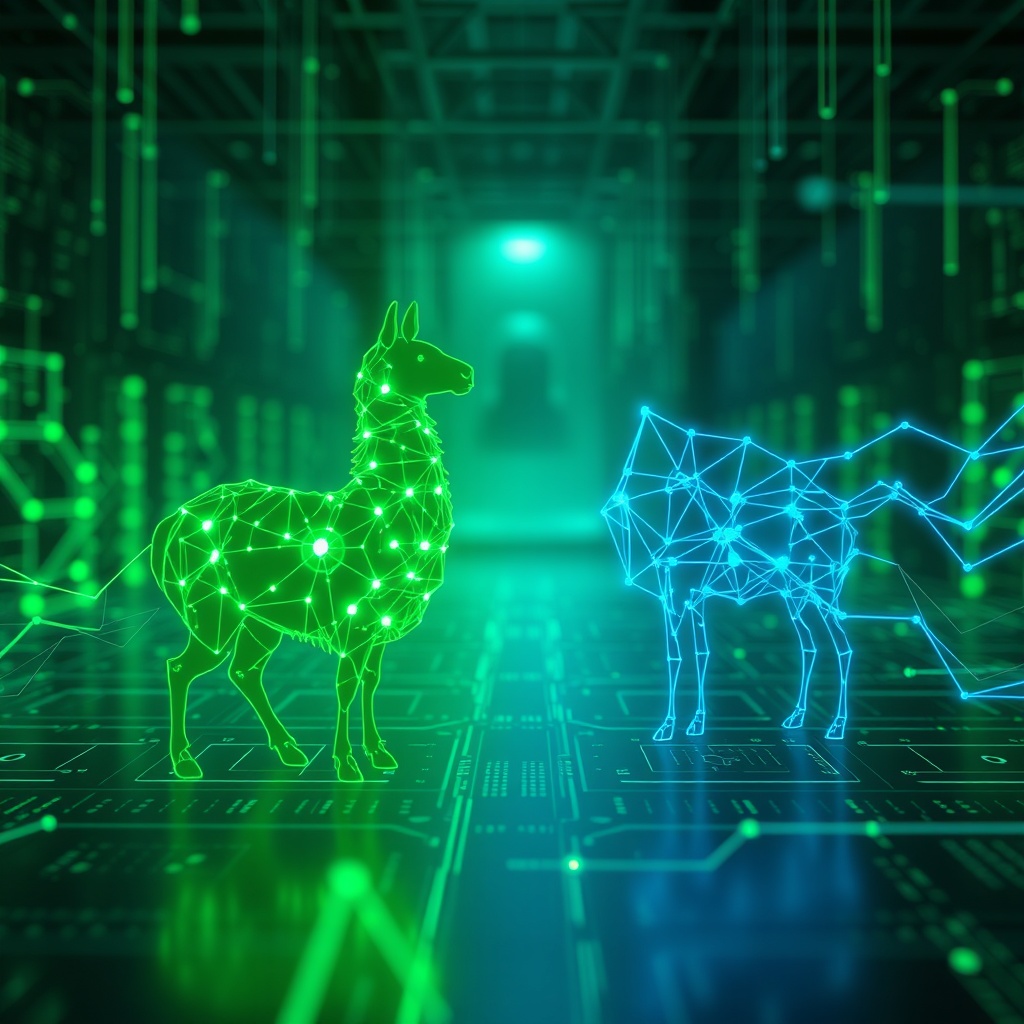
최근 뉴스 피드를 보면 '메타의 Llama 3 무료 공개', 'OpenAI의 새로운 전략' 같은 기사가 쏟아집니다. 🧠 이게 도대체 무슨 의미일까요? 단순히 몇몇 빅테크 기업들의 경쟁으로만 보이지만, 사실 이면에는 AI 생태계의 패러다임을 바꿀 엄청난 변화가 숨어있습니다. 오늘은 이 복잡한 'AI 오픈소스 전쟁'을 해부하고, IT 기획 팀장으로서 여러분이 이 흐름을 읽고 '있어빌리티' 넘치는 인사이트를 얻을 수 있도록 돕겠습니다. 과연 내 프로젝트에는 어떤 방식이 최적일까요? 함께 그 답을 찾아보시죠! 🚀
1. 개념 소개: 오픈소스 AI vs. 클로즈드소스 AI, 그 본질은? 💡
AI 모델을 이야기할 때 가장 기본이 되는 개념은 오픈소스(Open-source)와 클로즈드소스(Closed-source)입니다. 이 두 가지 방식은 단순한 기술 공개 여부를 넘어, AI 기술 발전의 방향성, 비즈니스 모델, 그리고 우리 사회에 미치는 영향까지 결정하는 중요한 축입니다. 핵심적인 차이점을 표로 정리해볼까요?
| 구분 | 오픈소스 AI (예: Llama) | 클로즈드소스 AI (예: GPT) |
|---|---|---|
| 정의 | 모델의 코드, 가중치 등이 공개되어 누구나 사용, 수정, 배포 가능 | 모델의 내부 구조 및 학습 데이터가 비공개, API를 통해 서비스 제공 |
| 접근성 | 높음 (대부분 무료 또는 저렴) | 제한적 (API 사용료 기반) |
| 커스터마이징 | 매우 용이 (자유롭게 수정 및 파인튜닝) | 제한적 (제공되는 API 기능 범위 내) |
| 혁신 속도 | 커뮤니티 기반의 빠른 확산 및 개선 | 주도 기업의 자본/인력 집중으로 인한 선두 기술 개발 |
| 장점 | 비용 절감, 데이터 주권 확보, 특정 도메인 최적화, 투명성 | 최고 성능, 편리한 접근성, 강력한 지원, 빠른 기능 업데이트 |
| 단점 | 구축/운영 비용(인프라), 전문 인력 필요, 보안 및 책임 소재 모호 | 비용 부담, 벤더 종속성, 데이터 통제 어려움, 블랙박스 문제 |
이 표만 봐도 두 진영이 서로 다른 강점과 약점을 가지고 있음을 알 수 있습니다. 클로즈드소스가 압도적인 성능과 편리함을 내세운다면, 오픈소스는 비용 효율성과 높은 자유도로 승부하는 거죠.
2. 최신 트렌드: 메타의 '무료' 선언, 왜 시장을 뒤흔들었나? 📈
최근 AI 시장의 가장 큰 이슈 중 하나는 단연 메타의 'Llama' 시리즈 공개와 '무료' 선언입니다. 특히 Llama 3는 상업적 이용까지 허용하며 파장을 일으켰죠. 왜 메타는 막대한 투자를 통해 개발한 최신 AI 모델을 사실상 '무료'로 풀었을까요? 그리고 OpenAI는 왜 긴장하는 걸까요?
- 메타의 전략: AI 생태계 주도권 확보 🌐
메타는 Llama를 통해 AI 기술의 '표준'을 선점하려는 전략입니다. 많은 개발자가 Llama를 사용하고 커스터마이징할수록 Llama 생태계는 더욱 강력해지고, 이는 장기적으로 메타의 다른 서비스(VR/AR, 소셜 미디어 등)와 시너지를 낼 수 있습니다. 마치 안드로이드가 모바일 시장을 장악한 것처럼, AI 시대의 '기본 운영체제'가 되겠다는 야심 찬 계획이죠. - OpenAI의 긴장: 비즈니스 모델의 위협 💰
OpenAI는 GPT 시리즈를 통해 'AIaaS(AI as a Service)'라는 클로즈드소스 비즈니스 모델을 성공시켰습니다. 그런데 Llama처럼 강력한 오픈소스 모델이 무료로 풀리면, 많은 기업이 굳이 비싼 API를 쓸 필요가 없어집니다. 특히 비용에 민감하거나 특정 분야에 특화된 AI가 필요한 경우, 오픈소스 모델은 훨씬 매력적인 대안이 됩니다. OpenAI는 이제 성능 우위와 최고 수준의 편의성으로 격차를 벌려야 하는 과제에 직면했습니다. - AI 기술 민주화와 혁신 가속화 🚀
메타의 이러한 움직임은 AI 기술의 진입 장벽을 낮추고 민주화를 가속화합니다. 스타트업이나 중소기업도 최첨단 AI 모델에 접근하여 혁신적인 서비스를 개발할 수 있는 기회를 얻게 됩니다. 이는 결국 전체 AI 시장의 파이를 키우고, 예상치 못한 곳에서 새로운 혁신이 터져 나오게 만들 것입니다.
메타의 '무료' 선언은 단순한 자선이 아닙니다. AI 생태계의 표준 경쟁과 개발자 커뮤니티 장악을 위한 전략적 행보이며, 이는 OpenAI가 주도하던 클로즈드소스 비즈니스 모델에 강력한 도전장을 던진 것입니다.
3. 의미와 시사점: AI 혁신과 비즈니스 모델의 미래 🌍
오픈소스와 클로즈드소스의 대결 구도는 AI 기술 혁신의 방향과 비즈니스 모델의 진화를 동시에 이끌고 있습니다. 제가 보기에는 이 싸움은 어느 한쪽의 완전한 승리가 아니라, 두 모델이 상호 보완적으로 발전하며 AI 생태계를 더욱 풍성하게 만들 것으로 예상됩니다.
- 기술 혁신의 양극화와 시너지 🌐
클로즈드소스 모델은 막대한 자본과 인력을 집중하여 소수의 초거대 모델을 개발하고, 이는 AI 기술의 '최전선'을 개척합니다. 반면, 오픈소스는 이 초거대 모델을 기반으로 다양한 파생 모델을 만들고, 특정 산업이나 도메인에 최적화된 '세분화된 혁신'을 주도합니다. 이 두 흐름이 서로에게 영감을 주고 경쟁하면서 전체 AI 기술의 발전을 가속화하는 시너지를 낼 것입니다. - 새로운 비즈니스 모델의 등장 💰
오픈소스 AI의 확산은 새로운 비즈니스 기회를 창출합니다. 모델 자체는 무료이지만, 이를 효율적으로 운영하기 위한 인프라(GPU), 파인튜닝, 보안, 컨설팅 등의 서비스가 각광받을 것입니다. 또한, 특정 산업에 특화된 데이터와 오픈소스 모델을 결합한 버티컬 AI 솔루션 시장도 크게 성장할 것으로 보입니다. 클로즈드소스 기업들은 이제 단순 API 판매를 넘어, 초개인화된 맞춤형 엔터프라이즈 솔루션이나 최고의 신뢰도를 요구하는 미션 크리티컬 서비스에 집중하게 될 것입니다. - 데이터 주권과 윤리적 고려 ⚖️
오픈소스 모델은 기업이 자체 서버에서 모델을 운영하며 데이터를 외부로 유출하지 않아도 되므로 데이터 주권을 확보할 수 있다는 큰 장점이 있습니다. 이는 특히 민감 정보를 다루는 금융, 의료 분야에서 중요한 요소가 됩니다. 또한, 모델의 작동 방식을 투명하게 검토할 수 있어 AI의 편향성이나 윤리적 문제를 자체적으로 검증하고 개선할 여지가 커집니다.
4. 업무 활용 팁: 내 프로젝트에 맞는 AI 모델 선택 가이드 🎯
IT 기획 팀장으로서 가장 실질적인 고민은 '그래서 우리 회사/프로젝트에는 어떤 AI 모델을 써야 할까?'일 겁니다. 정답은 없지만, 몇 가지 핵심 기준을 가지고 접근하면 합리적인 선택을 할 수 있습니다.
선택의 핵심 기준 📝
- 비용 효율성 💸: 예산이 한정적이라면 초기 인프라 투자 후 장기적으로는 오픈소스가 유리할 수 있습니다. 클로즈드소스는 사용량에 비례하는 API 비용이 발생합니다.
- 커스터마이징 및 특화 ⚙️: 특정 도메인의 전문 데이터로 모델을 미세 조정하거나, 우리 회사만의 독점적인 기능을 추가하고 싶다면 오픈소스가 압도적으로 유리합니다.
- 데이터 보안 및 주권 🔒: 사내 민감 데이터, 고객 개인 정보 등을 AI 학습에 활용해야 한다면, 자체 서버에 구축 가능한 오픈소스가 훨씬 안전합니다. 클로즈드소스는 데이터가 외부로 전송될 수 있음을 인지해야 합니다.
- 성능 및 개발 속도 💨: 초고성능이 필요하거나 시장 출시 시점이 매우 급박하다면, 이미 완성된 최고 성능의 클로즈드소스 API를 사용하는 것이 효율적일 수 있습니다.
- 기술 역량 및 인프라 💪: 오픈소스는 모델 설치, 파인튜닝, 운영 등에 대한 개발 역량과 GPU 등의 인프라가 필수적입니다. 반면, 클로즈드소스는 API 연동만으로 쉽게 시작할 수 있습니다.
예시 시나리오 📝
> 오픈소스 AI를 선택할 때:
- 사례 1: 금융 기관의 내부 문서 분석 AI. 민감한 고객 데이터를 외부 클라우드에 올릴 수 없어 온프레미스(On-premise) 구축이 필수적인 경우.
- 사례 2: 특정 의학 분야의 논문을 학습시킨 전문 QA 챗봇. 일반적인 AI 모델로는 답변 정확도가 떨어져 정밀한 파인튜닝이 필요한 경우.
- 사례 3: 초기 스타트업으로 개발 예산이 제한적이고, 자체 AI 역량 확보를 통해 장기적인 기술 경쟁력을 키우고 싶은 경우.
> 클로즈드소스 AI를 선택할 때:
- 사례 1: 사용자 피드백 분석을 위한 고객센터 챗봇. 최신 모델의 범용적인 고성능과 빠른 개발/배포가 중요한 경우.
- 사례 2: 복잡한 비즈니스 로직 없이 다양한 기능을 통합해야 하는 웹 서비스. API 연동을 통해 이미지 생성, 코드 작성 등 여러 기능을 한 번에 구현하고자 할 때.
- 사례 3: AI 모델 자체의 운영 및 유지보수에 대한 부담 없이, 최고 수준의 성능과 벤더의 기술 지원을 활용하고 싶은 경우.
오픈소스 선택 시 초기 인프라 구축 및 전문 인력 확보 비용을 간과해서는 안 됩니다. 또한, 클로즈드소스 모델 사용 시에는 벤더 종속성과 예측 불가능한 비용 증가 가능성을 항상 염두에 두어야 합니다.
5. Q&A: AI 오픈소스 전쟁, 궁금한 점 풀어보기 🔍
Q1. 오픈소스 AI, 정말 공짜인가요?
모델 자체의 라이선스 비용은 무료인 경우가 많지만, 모델을 구동하기 위한 고성능 GPU 서버(클라우드 또는 온프레미스) 구축 및 운영 비용이 발생합니다. 또한, 모델을 특정 목적에 맞게 파인튜닝하거나 유지보수하는 데 필요한 전문 인력 비용도 고려해야 합니다. 즉, '공짜'는 아니지만, 클로즈드소스 API 사용료보다는 장기적으로 비용 효율적일 수 있습니다.
Q2. 클로즈드소스 모델이 완전히 사라질 수도 있나요?
그럴 가능성은 낮습니다. 클로즈드소스 모델은 여전히 최고 수준의 범용 성능과 편리한 접근성, 그리고 강력한 엔터프라이즈 지원이라는 강점을 가지고 있습니다. 특히 기술 격차를 꾸준히 벌리면서 특정 분야에서는 여전히 독점적인 위치를 유지할 것입니다. 오히려 오픈소스 모델과 상호 보완적으로 발전하며 AI 시장을 확장하는 역할을 할 것으로 보입니다.
Q3. 스타트업에게 오픈소스 AI는 어떤 의미인가요?
스타트업에게 오픈소스 AI는 혁신과 기회의 보물창고와 같습니다. 값비싼 상용 모델 없이도 최신 AI 기술을 활용하여 아이디어를 빠르게 프로토타이핑하고, 특정 니즈에 맞춰 모델을 커스터마이징하여 틈새시장을 공략할 수 있습니다. 다만, 기술 스택과 인력 확보에 대한 전략적 투자가 뒷받침되어야 합니다.
오늘 우리는 메타의 '무료' 선언이 촉발한 AI 오픈소스 전쟁의 본질과 그 의미를 심층적으로 탐구했습니다. 이제 오픈소스(Llama)와 클로즈드소스(GPT) 모델의 차이점을 명확히 이해하고, 각자의 강점과 약점, 그리고 AI 생태계에 미치는 영향을 파악하셨으리라 믿습니다. 💡 여러분의 프로젝트에 어떤 방식이 더 적합할지 고민할 때, 오늘 배운 관점들이 큰 도움이 될 것입니다. 단순한 기술 트렌드를 넘어, 자신만의 관점을 가지고 전문가처럼 이야기할 수 있는 '있어빌리티'를 갖추는 것이 중요합니다. 다음 편에서는 더욱 흥미로운 AI 생태계 이야기로 돌아오겠습니다! 🚀
This post is part of the "AI Ecosystem Insights for 'Iss-a-bility'" series, aiming to clarify the intricate present and future of AI technology for IT planning team leaders and provide deep insights into the latest trends. Each article follows a structured format: Concept Introduction → Latest Trends → Implications and Significance → Practical Tips/Examples, guiding readers to develop their own perspectives and speak like experts, moving beyond mere knowledge.
Meta's 'Free' Declaration: Why is OpenAI Tense? The AI Open-Source War Explained 💡
Recently, news feeds have been flooded with articles like 'Meta's Llama 3 Free Release' and 'OpenAI's New Strategy'. 🧠 What do these really mean? While it might seem like just competition between a few big tech companies, there's a massive shift hidden beneath the surface, poised to change the paradigm of the AI ecosystem. Today, we'll dissect this complex 'AI Open-Source War' and, as an IT planning team leader, help you read these trends and gain 'iss-a-bility' (an air of competence) insights. Which approach is optimal for your project? Let's find the answer together! 🚀
1. Concept Introduction: Open-Source AI vs. Closed-Source AI, What's the Essence? 💡
When discussing AI models, the fundamental concepts are open-source and closed-source. These two approaches go beyond simple technology disclosure; they determine the direction of AI development, business models, and even their impact on society. Let's summarize the key differences in a table:
| Category | Open-Source AI (e.g., Llama) | Closed-Source AI (e.g., GPT) |
|---|---|---|
| Definition | Model code, weights, etc., are public; anyone can use, modify, distribute | Internal structure and training data are private; services provided via API |
| Accessibility | High (mostly free or low-cost) | Limited (based on API usage fees) |
| Customization | Very easy (free to modify and fine-tune) | Limited (within the scope of provided API features) |
| Innovation Speed | Rapid dissemination and improvement based on community | Leading technology development by concentrated capital/talent of the dominant company |
| Advantages | Cost savings, data sovereignty, domain optimization, transparency | Top performance, convenient access, strong support, rapid feature updates |
| Disadvantages | Setup/operation costs (infrastructure), need for expert personnel, ambiguous security/accountability | Cost burden, vendor lock-in, difficulty in data control, black-box problem |
Even this table shows that the two camps have different strengths and weaknesses. While closed-source boasts overwhelming performance and convenience, open-source competes with cost-effectiveness and high freedom.
2. Latest Trends: Meta's 'Free' Declaration, Why Did It Rock the Market? 📈
One of the biggest issues in the recent AI market is undoubtedly Meta's release of the 'Llama' series and its 'free' declaration. Llama 3, in particular, caused a stir by allowing commercial use. Why did Meta release its latest AI model, developed with massive investment, virtually 'for free'? And why is OpenAI feeling the tension?
- Meta's Strategy: Securing AI Ecosystem Leadership 🌐
Meta's strategy with Llama is to seize the 'standard' in AI technology. The more developers use and customize Llama, the stronger the Llama ecosystem becomes, which can long-term create synergy with Meta's other services (VR/AR, social media, etc.). It's an ambitious plan to become the 'default operating system' of the AI era, much like Android dominated the mobile market. - OpenAI's Tension: Threat to Business Model 💰
OpenAI successfully built a closed-source business model, 'AIaaS (AI as a Service),' through its GPT series. However, if powerful open-source models like Llama are released for free, many companies won't see the need to pay for expensive APIs. Especially for those sensitive to cost or needing specialized AI for specific domains, open-source models become a much more attractive alternative. OpenAI now faces the challenge of widening the gap with superior performance and top-tier convenience. - Democratization of AI Technology and Accelerated Innovation 🚀
Meta's move lowers the entry barrier to AI technology and accelerates its democratization. Startups and SMEs also get the opportunity to access cutting-edge AI models and develop innovative services. This will ultimately expand the overall AI market and trigger new innovations from unexpected places.
Meta's 'free' declaration is not mere philanthropy. It's a strategic move for standard competition and developer community dominance in the AI ecosystem, posing a strong challenge to the closed-source business model led by OpenAI.
3. Implications and Significance: The Future of AI Innovation and Business Models 🌍
The rivalry between open-source and closed-source is simultaneously driving the direction of AI technology innovation and the evolution of business models. In my view, this battle is not about a complete victory for one side, but rather, both models will develop complementarily, enriching the AI ecosystem.
- Polarization and Synergy in Tech Innovation 🌐
Closed-source models concentrate vast capital and talent to develop a few super-large models, pioneering the 'frontiers' of AI technology. Conversely, open-source builds upon these super-large models to create diverse derived models, driving 'segmented innovation' optimized for specific industries or domains. These two currents will inspire and compete with each other, creating synergy that accelerates overall AI technology development. - Emergence of New Business Models 💰
The spread of open-source AI creates new business opportunities. While the models themselves are free, services like infrastructure (GPU), fine-tuning, security, and consulting for efficient operation will gain prominence. Additionally, the market for vertical AI solutions, combining domain-specific data with open-source models, is expected to grow significantly. Closed-source companies will now focus beyond simple API sales, targeting hyper-personalized custom enterprise solutions or mission-critical services requiring the highest reliability. - Data Sovereignty and Ethical Considerations ⚖️
Open-source models offer a significant advantage in securing data sovereignty, as companies can operate models on their own servers without sensitive data being leaked externally. This is a crucial factor, especially in finance and healthcare, which handle sensitive information. Moreover, the ability to transparently review how a model works increases the potential for self-verification and improvement of AI's biases or ethical issues.
4. Practical Tips: Guide to Choosing the Right AI Model for Your Project 🎯
As an IT planning team leader, the most practical concern will be, 'So, which AI model should our company/project use?' There's no single right answer, but approaching it with a few key criteria can lead to a rational choice.
Key Selection Criteria 📝
- Cost Efficiency 💸: If the budget is limited, open-source might be advantageous long-term after initial infrastructure investment. Closed-source incurs API costs proportional to usage.
- Customization and Specialization ⚙️: If you want to fine-tune a model with domain-specific expert data or add exclusive features unique to your company, open-source is overwhelmingly advantageous.
- Data Security and Sovereignty 🔒: If internal sensitive data, customer personal information, etc., must be used for AI training, open-source, which can be deployed on your own servers, is much safer. Be aware that data may be transmitted externally with closed-source.
- Performance and Development Speed 💨: If ultra-high performance is needed or the market launch date is very urgent, using a ready-made, top-performing closed-source API can be efficient.
- Technical Capability and Infrastructure 💪: Open-source requires development capability for model installation, fine-tuning, operation, and infrastructure like GPUs. Closed-source, on the other hand, can be easily started by just integrating an API.
Example Scenarios 📝
> When to choose Open-Source AI:
- Case 1: An internal document analysis AI for a financial institution. Where sensitive customer data cannot be uploaded to an external cloud, making on-premise deployment essential.
- Case 2: A specialized QA chatbot trained on papers in a specific medical field. Where general AI models lack accuracy, requiring precise fine-tuning.
- Case 3: An early-stage startup with limited development budget, aiming to build long-term technological competitiveness through in-house AI capabilities.
> When to choose Closed-Source AI:
- Case 1: A customer service chatbot for analyzing user feedback. Where general high performance of the latest models and rapid development/deployment are critical.
- Case 2: A web service that needs to integrate various functions without complex business logic. When aiming to implement multiple features like image generation, code writing, etc., all through API integration.
- Case 3: When wanting to utilize top-tier performance and vendor technical support without the burden of operating and maintaining the AI model itself.
When choosing open-source, do not overlook the initial costs for infrastructure setup and securing expert personnel. Also, when using closed-source models, always keep in mind vendor lock-in and the potential for unpredictable cost increases.
5. Q&A: Unraveling the AI Open-Source War 🔍
Q1. Is open-source AI truly free?
The license fee for the model itself is often free, but costs for building and operating high-performance GPU servers (cloud or on-premise) to run the model will incur. Additionally, expert personnel costs needed for fine-tuning or maintaining the model for specific purposes must be considered. So, it's not 'free' in the absolute sense, but it can be more cost-effective in the long run than closed-source API usage fees.
Q2. Could closed-source models disappear entirely?
That's unlikely. Closed-source models still possess strengths like top-tier general-purpose performance, convenient accessibility, and strong enterprise support. They will likely maintain a dominant position in specific areas by continuously widening the technology gap. Rather, they are expected to play a role in expanding the AI market by developing complementarily with open-source models.
Q3. What does open-source AI mean for startups?
For startups, open-source AI is like a treasure trove of innovation and opportunity. They can leverage the latest AI technology to quickly prototype ideas without expensive commercial models, and customize models to specific needs to target niche markets. However, strategic investment in technology stack and talent acquisition must back this up.
Today, we've deeply explored the essence and implications of the AI open-source war triggered by Meta's 'free' declaration. I trust you now clearly understand the differences between open-source (Llama) and closed-source (GPT) models, their respective strengths and weaknesses, and their impact on the AI ecosystem. 💡 These perspectives will be a great help when you're considering which approach is more suitable for your project. Beyond simple tech trends, it's crucial to cultivate 'iss-a-bility' – the ability to speak like an expert with your own perspective. We'll return with even more exciting stories from the AI ecosystem in the next installment! 🚀
댓글
댓글 쓰기