[AI EcoSystem]8. SK하이닉스, 삼성이 없으면 챗GPT도 없다? HBM 메모리 전쟁의 승자는? (No ChatGPT Without SK Hynix, Samsung? The HBM Memory War)
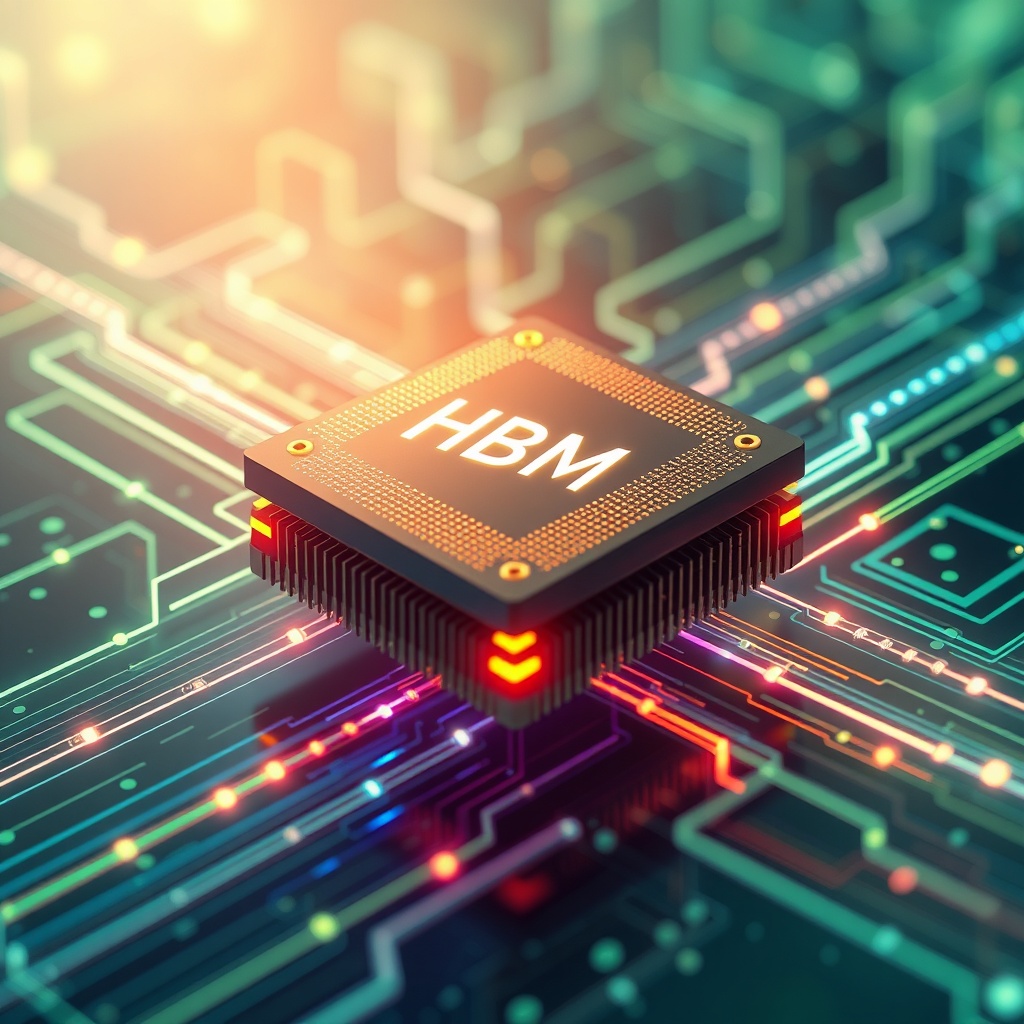
최근 뉴스에서 '엔비디아 주가 폭등', 'AI 반도체 품귀 현상' 같은 헤드라인을 자주 보셨을 겁니다. 📈 이 모든 이야기의 중심에는 바로 인공지능(AI)의 두뇌 역할을 하는 반도체가 있죠. 특히, 이 반도체들이 데이터를 처리하는 속도를 결정짓는 보이지 않는 핵심 부품이 있습니다. 바로 HBM (고대역폭 메모리)입니다. 오늘은 이 HBM이 무엇이고, 왜 SK하이닉스와 삼성전자가 이 기술을 놓고 치열하게 경쟁하는지, 그리고 이 싸움이 우리의 AI 미래에 어떤 영향을 미칠지 IT 기획 팀장인 제가 명쾌하게 정리해 드리겠습니다. 이 글을 통해 여러분도 AI 반도체 이야기를 전문가처럼 할 수 있는 '있어빌리티'를 장착하게 될 겁니다! 🚀
1. HBM, 왜 그렇게 중요할까? 🧠
HBM은 'High Bandwidth Memory'의 약자로, 이름 그대로 아주 높은 대역폭(데이터 전송 속도)을 제공하는 메모리입니다. 기존의 일반적인 D램(DRAM)과 비교하면, 마치 고속도로가 차선이 몇 개 더 늘어나는 수준이 아니라, 완전히 새로운 차원의 고속 전용 도로가 생기는 것과 같습니다. 어떻게 이게 가능할까요?
핵심은 바로 '수직 적층' 기술에 있습니다. 여러 개의 D램 칩을 수직으로 쌓아 올리고, 이 칩들을 'TSV(Through Silicon Via)'라는 수많은 미세 구멍을 통해 연결합니다. 이렇게 하면 데이터가 이동하는 경로가 획기적으로 짧아져 속도가 빨라지고, 전력 효율도 높아지죠. AI 시대의 GPU(그래픽 처리 장치)는 엄청난 양의 데이터를 동시에, 그리고 빠르게 처리해야 하는데, HBM은 이런 GPU의 성능을 최대로 끌어낼 수 있는 유일한 메모리 솔루션인 셈입니다. 💡
2. 최신 트렌드: 한국 반도체 기업들의 뜨거운 HBM 전쟁 ⚔️
HBM 시장은 현재 SK하이닉스와 삼성전자가 양분하고 있습니다. 특히 SK하이닉스는 HBM3를 세계 최초로 개발하고 엔비디아에 독점 공급하면서 시장 선점 효과를 톡톡히 누렸습니다. 이어서 HBM3E (HBM3 Extended)까지 발 빠르게 양산하며 기술 리더십을 공고히 하고 있죠.
하지만 삼성전자도 만만치 않습니다. 삼성은 후발주자지만, HBM3E와 차세대 HBM4 개발에 박차를 가하며 추격하고 있습니다. 특히 '턴키(Turn-key)' 방식의 통합 솔루션, 즉 메모리뿐만 아니라 시스템 반도체(로직)와 패키징까지 한 번에 제공하는 전략으로 승부수를 띄우고 있죠. 이는 고객사 입장에서는 공급망 단순화와 개발 시간 단축이라는 큰 장점을 제공합니다.
HBM 기술 경쟁은 단순한 메모리 성능 경쟁을 넘어, 어떤 기업이 AI 반도체 생태계의 '표준'을 제시하고 주도권을 잡을 것인가의 싸움입니다. 엔비디아와의 파트너십이 중요한 이유도 여기에 있습니다.
3. 의미와 시사점: HBM이 결정하는 AI 산업의 속도 🚀
챗GPT 같은 거대 언어 모델(LLM)이 발전하려면 엄청난 양의 데이터를 실시간으로 처리해야 합니다. 여기서 HBM은 AI 가속기의 성능을 결정짓는 핵심 부품입니다. HBM 없이는 GPU가 아무리 강력해도 제 성능을 낼 수 없어요. 마치 최고급 스포츠카에 좁은 시골길밖에 달릴 수 없는 것과 같죠.
결국, HBM의 기술 발전 속도가 곧 AI 산업 전체의 발전 속도를 결정한다고 봐도 무방합니다. 더 빠르고, 더 저렴하고, 더 효율적인 HBM이 개발될수록 우리는 더 강력하고 접근성 높은 AI 서비스를 만날 수 있게 될 겁니다. 이런 관점에서 SK하이닉스와 삼성전자의 HBM 경쟁은 단순한 기업 간의 싸움이 아니라, 대한민국이 글로벌 AI 생태계에서 리더십을 유지할 수 있는 중요한 기반이 됩니다. 제가 보기엔 반도체 기술력이 AI 시대의 국력과 직결되는 시대가 온 겁니다. 🇰🇷
4. 업무 활용 팁: HBM 지식으로 '있어빌리티' 장착하기! 🎯
자, 이제 이 HBM 지식을 어떻게 여러분의 '있어빌리티'를 높이는 데 활용할 수 있을까요? 제가 IT 기획 팀장으로서 실무적인 관점을 드려볼게요.
- IT 기획자/프로젝트 매니저: AI 프로젝트 예산 책정 시, 단순 GPU 비용뿐만 아니라 HBM 탑재 여부와 세대별 가격, 공급망 안정성을 함께 고려해야 합니다. "저희 AI 가속기는 HBM3E가 적용되어 기존 대비 50% 이상 효율적입니다"라고 말할 수 있다면, 당신의 전문성은 돋보일 겁니다.
- 개발자: AI 모델을 설계하고 최적화할 때, HBM의 대역폭과 용량을 이해하면 메모리 접근 패턴을 최적화하여 모델 성능을 극대화할 수 있습니다. 예를 들어, 배치(Batch) 사이즈를 조절하거나, 데이터 프리페칭(Prefetching) 전략을 세울 때 HBM 특성을 고려하는 거죠.
- 비즈니스 리더/투자자: AI 산업 투자 또는 전략 수립 시, 반도체 기업들의 HBM 개발 로드맵과 생산 능력은 핵심적인 투자 지표가 됩니다. HBM 경쟁의 승자가 곧 AI 시대의 패권을 좌우할 수도 있다는 인사이트를 가지는 거죠.
AI 프로젝트 제안서에 HBM 인사이트 녹여내기 📝
"저희는 최신 HBM3E 기술이 적용된 엔비디아 H100 GPU를 활용하여, 기존 대비 데이터 처리 속도를 2배 향상시키고, 에너지 효율을 30% 개선할 수 있는 AI 모델 학습 인프라를 구축할 계획입니다. 이는 장기적으로 운영 비용 절감과 더욱 빠른 모델 배포로 이어질 것입니다."
어떤가요? 그냥 '좋은 GPU 쓸게요' 하는 것보다 훨씬 전문적으로 들리지 않나요? 😉
FAQ: HBM에 대해 더 궁금한 점은? 🔍
Q1: HBM이 비싼데, 대체할 만한 다른 기술은 없을까요?
A1: 현재로서는 고성능 AI 프로세서에 HBM만큼의 대역폭과 효율을 제공하는 메모리 솔루션은 마땅치 않습니다. 하지만 HBM 가격 인하 노력과 더불어, CXL(Compute Express Link) 같은 새로운 인터페이스 기술을 통해 메모리 확장성과 유연성을 높이려는 시도가 계속되고 있습니다. 장기적으로는 HBM과 함께 다양한 메모리 솔루션이 공존할 것으로 예상됩니다.
Q2: 한국 기업이 HBM 시장의 선두를 계속 유지할 수 있을까요?
A2: 현재 SK하이닉스와 삼성전자는 HBM 기술에서 압도적인 리더십을 가지고 있습니다. 하지만 마이크론 등 후발주자들의 추격도 만만치 않고, HBM4를 넘어선 차세대 기술 개발 경쟁은 더욱 치열해질 것입니다. 지속적인 R&D 투자, 수율 개선, 그리고 엔비디아와 같은 주요 고객사와의 긴밀한 협력 관계를 유지하는 것이 핵심입니다.
자, 이제 HBM에 대해 누구에게든 자신 있게 설명할 수 있겠죠? 오늘 배운 관점으로 여러분의 업무를 새롭게 바라보는 계기가 되기를 바랍니다. 다음 편에서는 더욱 흥미로운 AI 생태계 이야기로 돌아오겠습니다! 💡
You've likely seen headlines recently about 'NVIDIA stock surge' and 'AI semiconductor shortage'. 📈 At the heart of these stories are the semiconductors that act as the brain of Artificial Intelligence (AI). Specifically, there's a critical, often unseen component that determines how fast these semiconductors process data: HBM (High Bandwidth Memory). Today, as an IT Planning Team Leader, I'll clearly explain what HBM is, why SK Hynix and Samsung are locked in a fierce battle for this technology, and how this competition will impact our AI future. By the end of this article, you'll be equipped with the 'IT-Ability' to confidently discuss AI semiconductors like an expert! 🚀
1. HBM: Why Is It So Crucial? 🧠
HBM, or 'High Bandwidth Memory,' as its name suggests, provides exceptionally high bandwidth (data transfer speed). Compared to conventional DRAM, it's not just adding a few more lanes to a highway; it's like building an entirely new dimension of high-speed, dedicated superhighway. How is this possible?
The key lies in 'vertical stacking' technology. Multiple DRAM chips are stacked vertically and connected through thousands of tiny holes called 'TSV (Through Silicon Via)'. This dramatically shortens the data path, increasing speed and improving power efficiency. In the age of AI, GPUs (Graphics Processing Units) need to process massive amounts of data concurrently and rapidly, and HBM is virtually the only memory solution that can maximize these GPU capabilities. 💡
2. Latest Trends: The Fierce HBM War Among Korean Semiconductor Giants ⚔️
The HBM market is currently dominated by SK Hynix and Samsung Electronics. SK Hynix, in particular, pioneered HBM3 and exclusively supplied it to NVIDIA, capitalizing significantly on its first-mover advantage. They've continued to rapidly mass-produce HBM3E (HBM3 Extended), solidifying their technological leadership.
However, Samsung Electronics is a formidable contender. While a latecomer, Samsung is accelerating HBM3E and next-generation HBM4 development. They are banking on a 'turn-key' integrated solution strategy, offering not just memory but also system semiconductors (logic) and packaging all at once. This approach provides significant advantages for client companies, such as supply chain simplification and reduced development time.
The HBM technology competition transcends mere memory performance; it's a battle over which company will set the 'standard' and seize leadership in the AI semiconductor ecosystem. This is why partnerships with companies like NVIDIA are so crucial.
3. Implications: How HBM Dictates the Pace of the AI Industry 🚀
For large language models (LLMs) like ChatGPT to advance, they require real-time processing of enormous amounts of data. Here, HBM is a critical component that determines the performance of AI accelerators. Without HBM, even the most powerful GPU cannot perform optimally. It's like having a top-tier sports car but only being able to drive it on narrow country roads.
Ultimately, it's fair to say that the pace of HBM technology development dictates the pace of the entire AI industry. The faster, cheaper, and more efficient HBM is developed, the more powerful and accessible AI services we will encounter. From this perspective, the HBM competition between SK Hynix and Samsung Electronics is not just a corporate battle; it's a crucial foundation for South Korea to maintain its leadership in the global AI ecosystem. In my view, we are entering an era where semiconductor technology directly correlates with national power in AI. 🇰🇷
4. Business Application Tips: Boost Your 'IT-Ability' with HBM Knowledge! 🎯
Now, how can you leverage this HBM knowledge to enhance your 'IT-Ability'? As an IT Planning Team Leader, let me offer some practical perspectives.
- IT Planners/Project Managers: When budgeting for AI projects, consider not just GPU costs, but also whether HBM is integrated, its generation-specific pricing, and supply chain stability. Being able to say, "Our AI accelerator uses HBM3E, making it over 50% more efficient than previous generations," will make your expertise stand out.
- Developers: When designing and optimizing AI models, understanding HBM's bandwidth and capacity allows you to optimize memory access patterns and maximize model performance. For instance, consider HBM characteristics when adjusting batch sizes or devising data prefetching strategies.
- Business Leaders/Investors: When making AI industry investments or strategic decisions, the HBM development roadmaps and production capacities of semiconductor companies are crucial investment indicators. You'll gain the insight that the winner of the HBM competition might just dictate the future of the AI era.
Incorporating HBM Insights into AI Project Proposals 📝
"We plan to build an AI model training infrastructure utilizing NVIDIA H100 GPUs with the latest HBM3E technology, which will improve data processing speed by 2x and enhance energy efficiency by 30% compared to existing systems. This will lead to long-term operational cost savings and faster model deployment."
Sounds much more professional than just saying, 'We'll use good GPUs,' doesn't it? 😉
FAQ: More Questions About HBM? 🔍
Q1: HBM is expensive. Are there alternative technologies?
A1: Currently, for high-performance AI processors, there's no readily available memory solution that offers the same bandwidth and efficiency as HBM. However, efforts to reduce HBM costs continue, along with attempts to enhance memory scalability and flexibility through new interface technologies like CXL (Compute Express Link). Long-term, a coexistence of HBM and various other memory solutions is expected.
Q2: Can Korean companies maintain their lead in the HBM market?
A2: Currently, SK Hynix and Samsung Electronics hold overwhelming leadership in HBM technology. However, latecomers like Micron are catching up, and the competition for next-generation technologies beyond HBM4 will become even fiercer. Key factors for maintaining leadership include continuous R&D investment, yield improvement, and close collaboration with major clients like NVIDIA.
Now, you can confidently explain HBM to anyone, right? I hope today's insights provide a new perspective on your work. We'll be back with more fascinating stories from the AI ecosystem in the next installment! 💡
댓글
댓글 쓰기